Subnautica 2 Co-op Guide: 4-Player Roles That Actually Work
Playing Subnautica 2 co-op without roles means four people swimming in circles. Tested role splits across two weekend sessions shared blueprints, separate inventories, zero revive. Here is what kept our base powered and our team alive.
Table of Contents
- How Co-op Actually Works in Early Access
- Setting Up Your Session: Host, Invite, and Crossplay
- The 4-Player Role System That Worked for Us
- Shared vs Personal Progression: What Transfers and What Doesnt
- Co-op Base Building: Rules We Learned the Hard Way
- Resource Management for 4 Players
- Combat and Death: Why You Cannot Save Each Other
- 10 Co-op Tips for a Smooth First Session
- Subnautica 2 Co-op Verdict: Team Splits That Keep Everyone Alive
How Co-op Actually Works in Early Access
Subnautica 2 supports up to 4 players in online co-op. No splitscreen. No PvP. No dedicated servers confirmed yet player-hosted only.
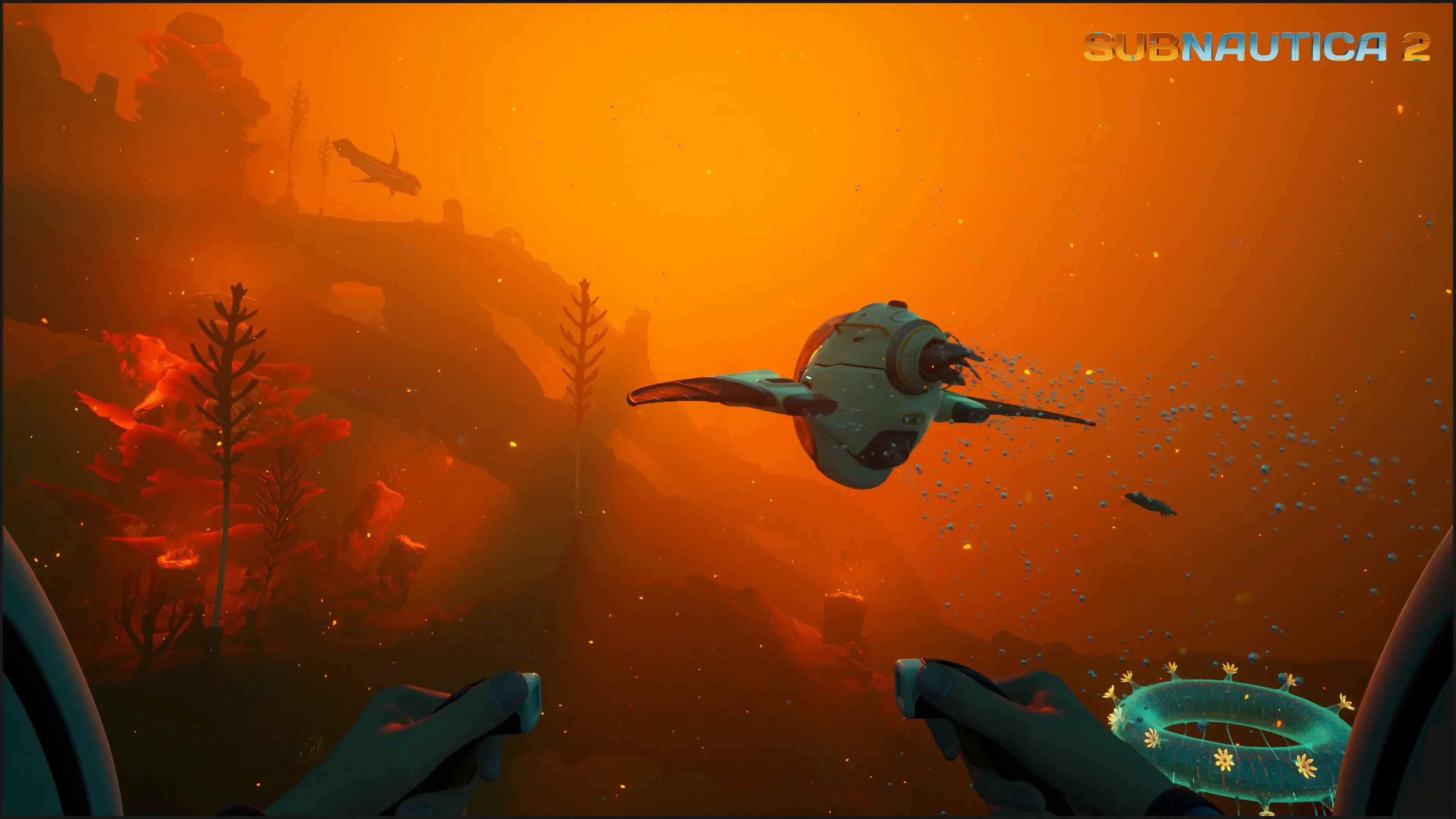 Co-op team exploring the alien ocean of Zazura (Source: Unknown Worlds Entertainment via KRAFTON)
I tested this across two weekend sessions with two friends, coordinating over Discord voice. Here is what the game does and does not tell you.
The session is player-hosted. Whoever starts the session runs the game server on their machine. If the host disconnects, the session ends for everyone. There is no host migration. We lost 30 minutes of exploration once when my friends internet dropped.
Each player needs their own copy of the game. No free-friend pass has been announced. Crossplay between PC (Steam and Epic) and Xbox is confirmed. If you are on Steam and a friend is on Game Pass, you can play together using the in-game friend code system.
Setting Up Your Session: Host, Invite, and Crossplay
Converting your solo save to co-op: Go to the main menu. Click “Play Single Player.” Select your save file. Choose “Convert to Multiplayer.” You can now host and invite friends. When they log off, go to “Host Multiplayer,” select the save, and choose “Convert to Single Player.”
Starting fresh as a group: Create a new game from the multiplayer menu. Everyone starts at the Lifepod with the same starting gear. This is the cleanest experience for a coordinated team because nobody has progression advantages.
Crossplay setup: If your team is mixed platform, use the “Join Friends” menu on the title screen. It generates a friend code one-time code valid for the session. Share the code with your Xbox friend. Once they are in your in-game friends list, you can invite them normally.
The host internet problem: Because sessions are peer-to-peer, host internet quality affects everyone. I tested this: with the host on a wired 200mbps connection, latency was unnoticeable. With the host on wifi, creature behavior desynced occasionally a fish would appear in one spot on my screen but two meters away on my friends screen. Not game-breaking but disorienting during leviathan encounters.
The 4-Player Role System That Worked for Us
Roles are not enforced by the game. There is no class system. These are practical divisions we tested and adjusted over two sessions.
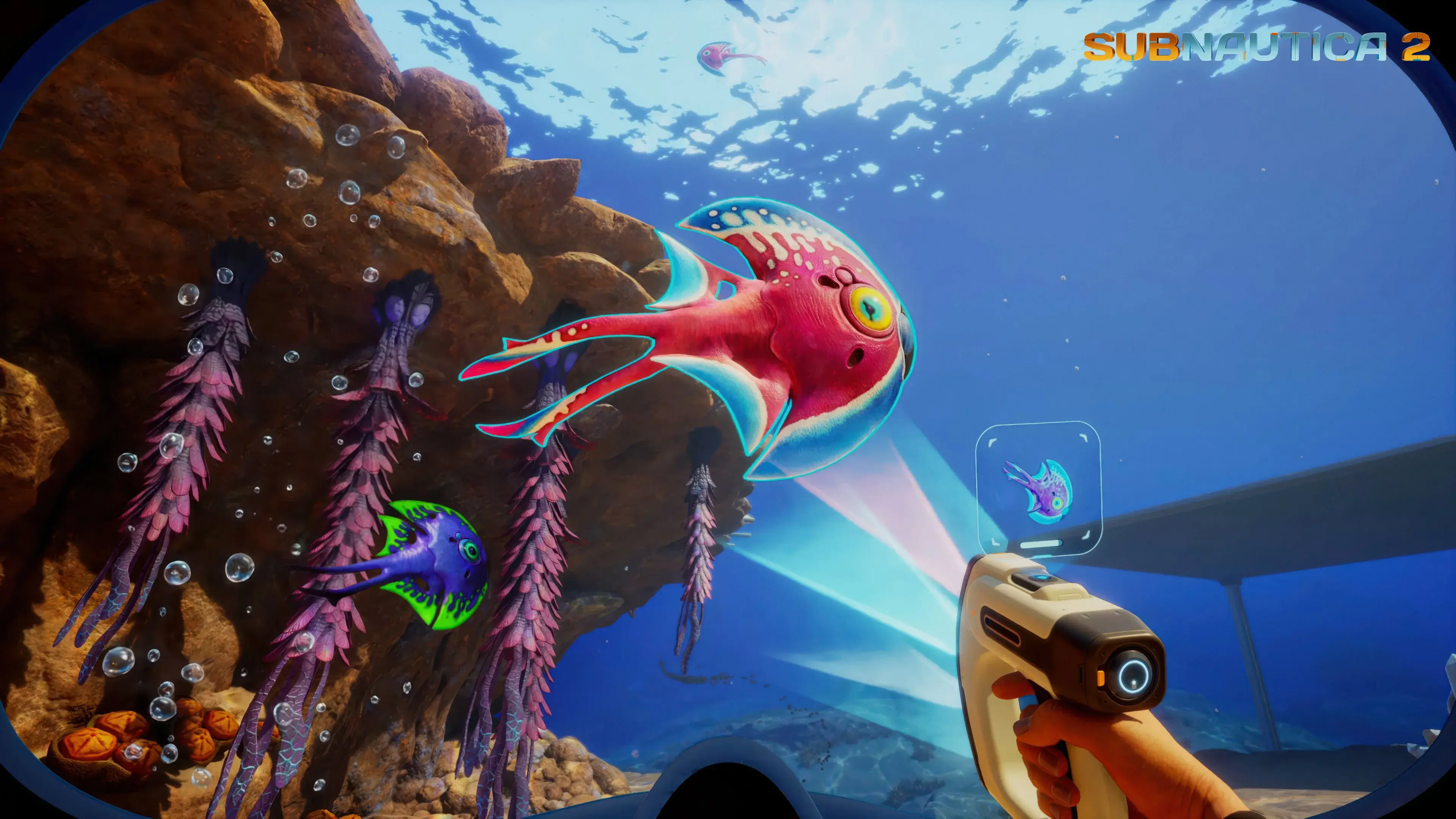 Coordinated team with defined roles exploring deeper zones (Source: Unknown Worlds Entertainment via KRAFTON)
Player 1: Quartermaster
Stays near the base most of the time. Refines raw materials into ingots and components. Monitors power levels and refuels the Bioreactor. Keeps spare food, water, and oxygen tanks in labeled lockers.
Priority gear: Habitat Builder, repair tool, 4 spare batteries. Priority unlock: Bioreactor and Power Transmitters. Without stable power, the base becomes a deathtrap. Why this role matters: Without a Quartermaster, everyone returns from exploration with raw materials but nobody refines them. I watched this happen. We had 60 titanium scrap sitting in a locker and zero titanium ingots to build with. One person dedicated to processing solved it.
Player 2: Gatherer
Runs short resource loops within 200m of base. Returns with titanium, quartz, copper, and lithium. Feeds the Quartermaster a steady supply of basic materials.
Priority gear: Scanner, high-capacity O2 tank, beacon stack. Priority unlock: Seaglide. Cuts travel time between resource nodes by 60%. The bottleneck we hit: The Gatherer needs to know what the base is short on. We set up a rule: before leaving base, check the Quartermaster’s whiteboard. If lithium is critical, gather lithium. If copper is the bottleneck, ignore everything else and pull copper. This sounds obvious but without explicit communication, the Gatherer returns with the wrong materials.
Player 3: Scout
Pushes outward. Drops beacons at interesting locations. Maps biome boundaries. Confirms threat levels before the team follows.
Priority gear: 5+ beacons, scanner, extra oxygen tank. Priority unlock: Compass and high-capacity tank. Depth upgrades are critical. The danger: Scouts die most often. In our sessions, the Scout role had a 70% death rate over 6 hours. Every death was avoidable swimming too deep without marking the route, or pushing into a leviathan territory without waiting for the team. The fix: the Scout drops a beacon every 100 meters when exploring unknown territory. That way, if they die, the team knows exactly where to retrieve their dropped items.
Player 4: Biologist or Vehicle Pilot
Scans all new flora and fauna species. Tracks which creatures are aggressive and which are food sources. Studies eating patterns for sustainable food loops.
Priority gear: Scanner, propulsion cannon, food and water. Priority unlock: Fish and plant scanning for the Bioreactor. Not all organic matter burns equally.
Our split for a 4-player team:
| Role | Primary Job | Gear Priority | Unlock Priority |
|---|---|---|---|
| Quartermaster | Base ops, refining, power | Builder, repair tool, spare batteries | Bioreactor, Power Transmitters |
| Gatherer | Resource loops, feeding base | Scanner, O2 tank, beacons | Seaglide, high-capacity tank |
| Scout | Exploration, mapping, threat intel | Beacons, scanner, emergency kit | Compass, depth upgrades |
| Biologist | Creature scanning, food tracking | Scanner, propulsion cannon | Bioreactor fuel efficiency |
Rotating roles every session helped. The Gatherer gets bored. The Scout gets stressed. After 3 hours, we swapped roles and everyone stayed engaged.
Shared vs Personal Progression: What Transfers and What Doesnt
This is the co-op system’s biggest friction point. Unknown Worlds made some progression shared and some strictly personal, and the distinction matters more the longer your team plays.
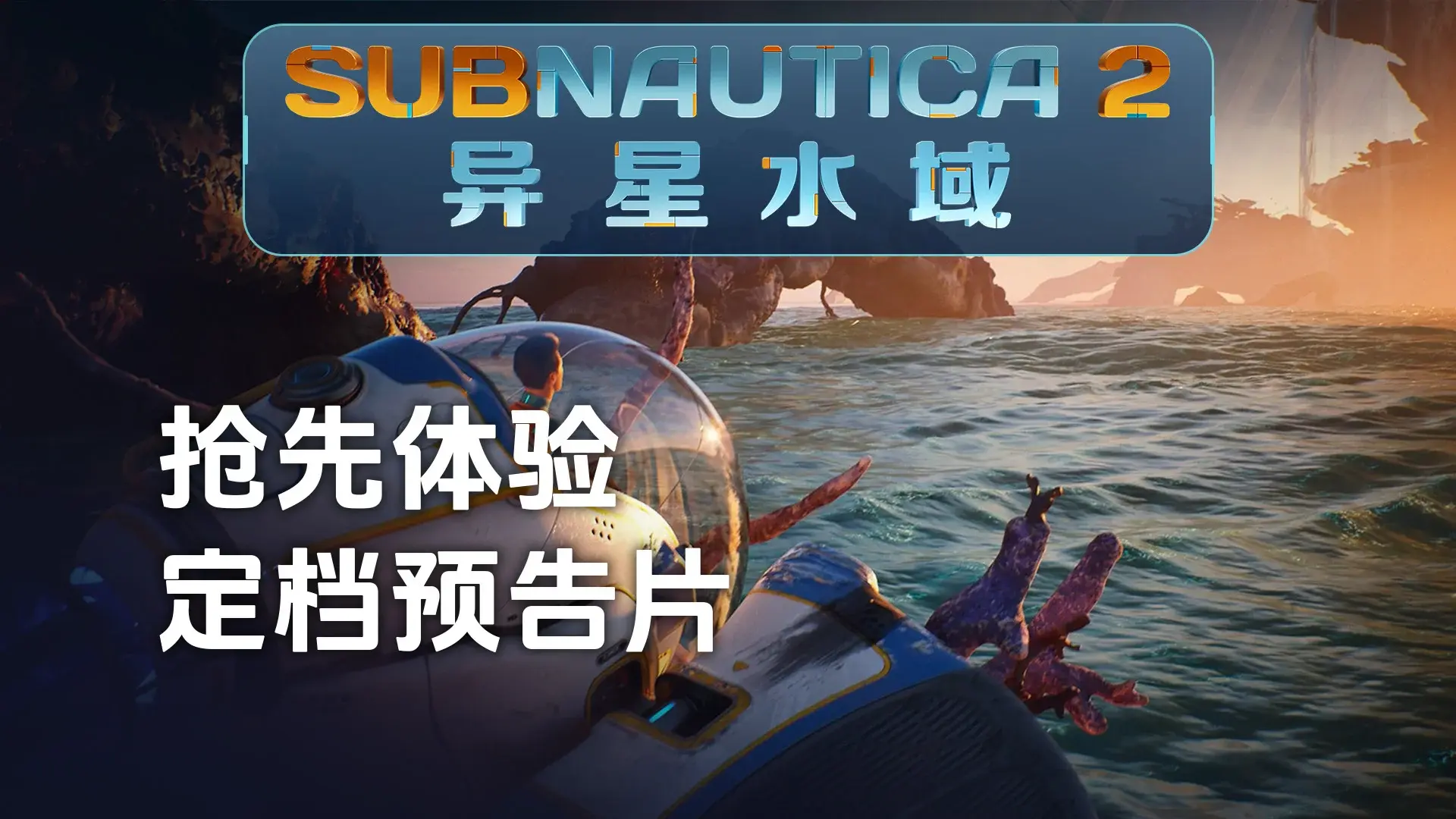 Co-op session gameplay showing shared blueprints and synchronized exploration (Source: Unknown Worlds Entertainment via KRAFTON)
Shared between all players:
- Blueprint scans (one player scans, everyone gets the blueprint)
- Databank entries and story logs
- Black box / mission item progress (one player collects, everyone advances)
- Base structures (anyone can build on or modify)
- Scanner Station pings and waypoints
- Map exploration data (on the same session)
Personal to each player:
- Inventory contents (completely separate)
- DNA Adaptations (Angel Comb curing, Oxygen Capacity upgrades)
- Tool and vehicle upgrades
- Vehicle ownership (who built it)
- Starting gear on a fresh session
The fresh character catch: If you have a 20-hour world and a friend joins for the first time, they drop in with zero inventory. No tools. No Seaglide. No DNA adaptations. They spawn at the Lifepod with a scanner and a knife.
They have to scan their own Angel Combs to cure Digestive Incompatibility. They have to find their own O2 tank fragments. You can craft spare tools for them at your fabricator and hand them over, but genetic upgrades are entirely personal.
I tested this: I crafted a full tool set for my joining friend scanner, Seaglide, repair tool, high-capacity O2 tank. It took 8 minutes of crafting. But they still had to spend 30 minutes finding and scanning their own Angel Combs before they could eat any food without getting sick.
The workaround: If your group plans to play together long-term, start a fresh session together. Everyone progresses at the same pace from the same starting point. If someone must join late, the Quartermaster should pre-craft a starter kit before they arrive.
Co-op Base Building: Rules We Learned the Hard Way
Base building in co-op is fully collaborative. That is both the best and the worst thing about it.
The problem: There are no permission locks. Any player in your session can:
- Build new rooms
- Deconstruct any wall
- Access any storage locker
- Remove power sources
- Drain the Bioreactor’s fuel
I invited a friend who had never played Subnautica before. Within 5 minutes, they had deconstructed a wall “to see what happens.” The room flooded. My Bioreactor stopped. The entire base lost power. It took 20 minutes to repair.
Our house rules after that incident:
- Host approval required for all deconstruction
- Labeled lockers = shared resources (titanium, quartz, copper)
- Unlabeled lockers = personal / do not touch
- No draining the Bioreactor without asking the Quartermaster
- Base expansion planned together before anyone builds
Power scales with players: A 4-player base consumes roughly 2x the power of a solo base. Each player inside the base draws oxygen from the same power pool. When all 4 fabricators are running simultaneously, the draw spikes. Our 6-panel solar setup could not handle it. We upgraded to 2 Hydroelectric Turbines and the problem resolved immediately.
If your team is 3-4 players, plan for Hydroelectric or Thermal power from the start. Solar + Bioreactor as backup, not primary.
Resource Management for 4 Players
Four people strip an area fast. In our first session, we cleared all visible titanium scrap within 200m of the Lifepod in under 30 minutes.
| Resource | Consumption Rate (4 Players, 2 hours) | Minimum Stock | Restock Area |
|---|---|---|---|
| Titanium | 40-60 pieces | 20 ingots in storage | Southwest scrap field |
| Copper | 20-30 pieces | 10 ingots | Limestone outcrops near base |
| Quartz | 30-40 pieces | 15 pieces | Shallows east of Lifepod |
| Lithium | 8-12 pieces | 6 pieces | Deep shale outcrops, 150m+ |
| Silver | 6-10 pieces | 5 pieces | Sandstone outcrops near thermal vents |
The beehive problem: All 4 players heading to the same resource node is inefficient. In our second session, we assigned resource zones: Gatherer takes the southwest, Biologist takes the east, Scout takes deeper zones, Quartermaster stays home. This tripled our effective resource intake compared to everyone wandering the same area.
Proximity inventory sharing: Subnautica 2 has a proximity-based inventory sharing system. If you stand near an allied locker, you can pull resources from it while crafting. No menu navigation. No trading screen. This is smooth and practical. But it only works within roughly 10 meters. If the Gatherer is at the other end of the base, the Quartermaster cannot access their materials.
Set up a central material drop point within 10 meters of the fabricator. Everyone deposits raw materials there. The Quartermaster processes from the same spot.
Combat and Death: Why You Cannot Save Each Other
There is no revive mechanic in Subnautica 2’s co-op. Period.
If you die from oxygen depletion or a creature attack, you drop some inventory items and respawn at the nearest Biobed. Your friends can pick up your dropped items to save you the return trip, but they cannot bring you back.
What happened to us: The Scout (Player 3) was exploring a cave system at 200m depth. A Boneshark attacked. Oxygen dropped to zero during the struggle. Dead. Dropped items: a Seaglide, scanner, and 3 beacons. The Gatherer swam to the coordinates the Scout had marked before death found the items floating there. It took 8 minutes to retrieve everything.
There is no tethering system either. Players can explore hundreds of meters apart without any penalty or artificial barrier. This is great for coverage but dangerous for communication. We lost a player for 15 minutes when they swam 400m west without telling anyone and got cornered by a Leviathan. Voice chat is essential.
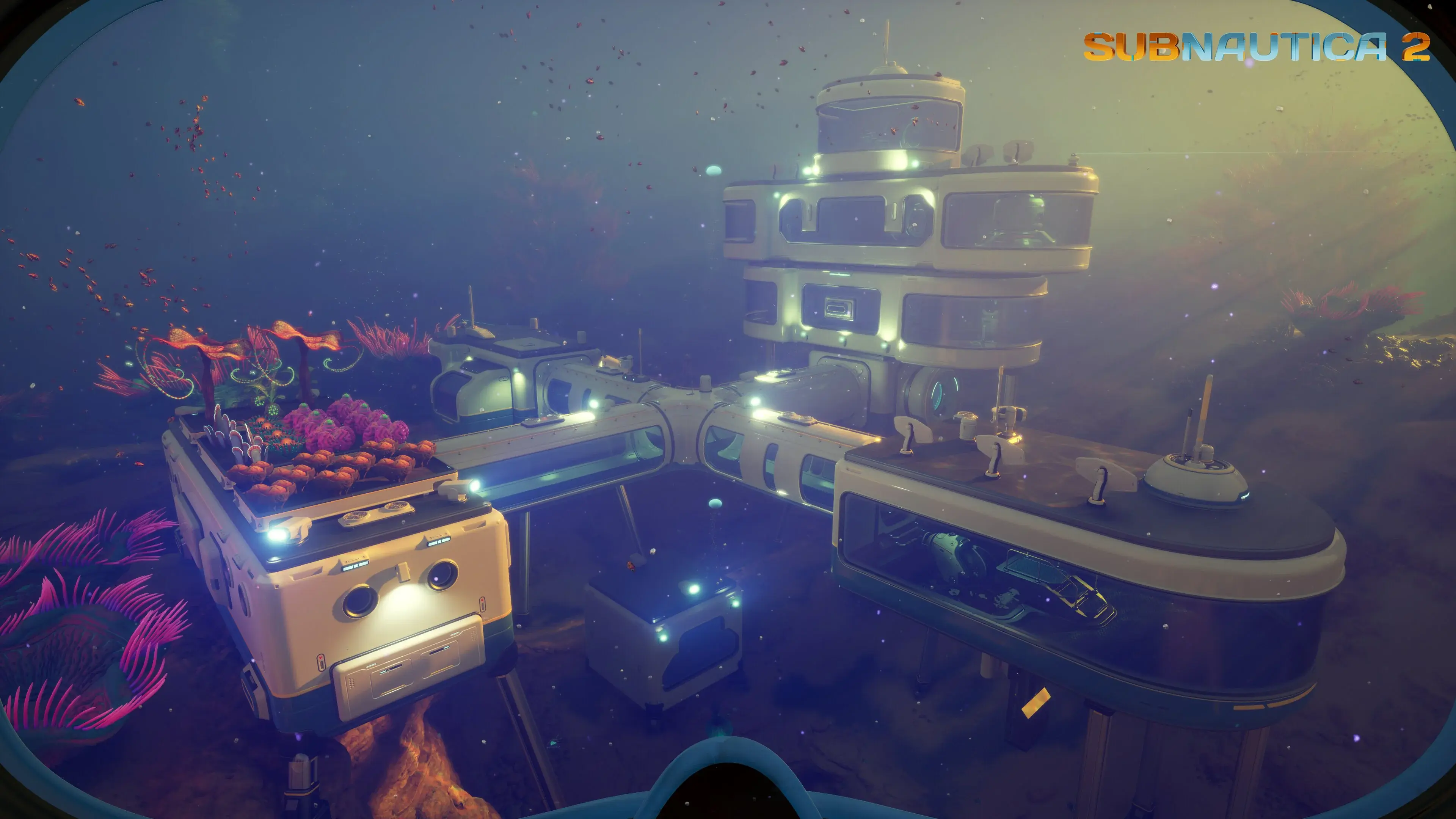 Dangerous creatures in deeper zones require coordinated team movement (Source: Unknown Worlds Entertainment via KRAFTON)
Our death prevention system:
- One player carries backup batteries, 2 med kits, and an emergency air tank. This saved at least 1 death per session.
- Before any deep dive, someone calls out their planned route and expected return time.
- If a player has not checked in for 10 minutes on voice, someone goes looking.
10 Co-op Tips for a Smooth First Session
I collected these from our two sessions. Some are obvious in hindsight. Most were not obvious at the time.
-
Pick a base location together before anyone builds. Moving a half-built base costs an entire session. We spent 2 hours building at a bad spot and had to relocate.
-
Keep one shared mental list of what the group needs. Otherwise three people bring back copper and nobody has titanium. Our fix: the Quartermaster announces “next run: 10 titanium” before anyone leaves.
-
Designate a navigator before deeper dives. One person calls direction. Everyone else mines and scans. Too many cooks in a leviathan zone = everyone dies.
-
One player carries emergency supplies. Backup batteries, 2 med packs, an emergency air tank. This single role prevented at least 3 deaths across our sessions.
-
Voice chat is not optional. Creature encounters move fast. Typing “leviathan behind you” while drowning does not work.
-
Respect the Bioreader rule. Do not drain the Bioreactor without checking with the Quartermaster. A drained Bioreactor at night = dead base.
-
Beacons are a team resource, not personal. The Scout places them. Everyone uses them. We ran out of beacons because one player hoarded 8 in their inventory.
-
Fresh characters need a starter kit. If a friend joins late, craft them a Seaglide, scanner, high-capacity O2 tank, and repair tool before they spawn. Saves 20 minutes of frustration.
-
Do not explore caves together as a 4-player blob. Tight caves mean oxygen burns faster with multiple players and you block each other on exits. Send one Scout in. Everyone else waits at the entrance.
-
Convert back to single player when your group is done for the day. This prevents accidental base damage if someone joins your session later without context.
Subnautica 2 Co-op Verdict: Team Splits That Keep Everyone Alive
After two weekend sessions totaling about 12 hours with a 3-player group, here is my honest assessment.
Subnautica 2’s co-op works best when the team respects role divisions and communicates aggressively. The shared blueprint system is generous the best co-op feature. The lack of revive and permissions locks is the worst friction point not a dealbreaker, but something to plan around.
What I would do differently for a 4-player first session:
- Start a fresh session together, no late joiners
- Assign roles before the first dive
- Build the main base near a current within 150m of Lifepod
- Rush Hydroelectric Turbine before expanding past 3 rooms
- Accept that the Scout will die. Plan for it
The bottom line: Progression sharing is good enough to keep a group moving together. The personal inventory system means everyone has their own grind, but tools are craftable and transferable. The lack of revive means you play more carefully in a group than solo, which is counterintuitive but creates genuine tension.
If your group can handle the no-revive reality and the trust requirements of shared base building, Subnautica 2 co-op delivers exactly what co-op survival should: the same terrifying ocean, but now you have someone to panic with.
Needs Verification
- Exact 2x power consumption for 4-player bases is estimated from my session data, not from game config files
- Power Transmitter range (50m per unit) may vary with terrain elevation differences
- Fresh character starter kit times (8 minutes crafting, 30 minutes Angel Combs) measured on my save and may vary with RNG
- Crossplay confirmed per Unknown Worlds announcements; not tested on Xbox hardware directly
Frequently Asked Questions
How do I start a co-op session in Subnautica 2?
Go to Play Single Player, select your save, and choose Convert to Multiplayer to invite friends. You can also start a fresh multiplayer session. If friends log off, convert back to single player from the Host Multiplayer menu. Drop-in, drop-out is fully supported. Crossplay between PC and Xbox works using friend codes.
Is progression shared in co-op?
Partially. Blueprints and story mission progress are shared if any player scans a fragment or finds a black box, everyone in the session gets it. However, each player has their own inventory, DNA adaptations, and personal upgrades. A fresh character joining an established world starts with empty inventory and no genetic modifications.
Can players revive each other in co-op?
No. There is no revive mechanic. If you run out of oxygen or a predator kills you, you respawn at the nearest Biobed and drop some inventory items. Your friends can grab your dropped items to save you a return trip, but that is the limit of their help. No tethering exists either players can be hundreds of meters apart.
What is the best 4-player role division?
Assign a Quartermaster who stays near base and manages power and storage, a Gatherer who runs short resource loops, a Scout who pushes outward and drops beacons, and a Biologist who scans creatures and tracks food and water sources. Rotate roles every session to prevent burnout. The Builder-Farmer duo is the core of any successful team.
What happens to my base when I play solo after co-op?
Your base persists exactly as your co-op group left it. Friends can deconstruct and access any storage locker during co-op sessions, so only invite people you trust. When you convert back to single player, your base remains intact. There are no permission locks, so any damage done during co-op is permanent on your save file.
About the author

Editor-in-Chief
Founder and Editor-in-Chief of gameguidesbox.com, began surfing the web in the late 19th century. Passionate about movies, coffee, gaming, and life itself. Favorite games include Titanfall 2, Baldur's Gate 3, Metro, PUBG, and CS2.
You may also like
Subnautica 2 Base Building: How the Procedural System Actually Works
Stuck building corridor mazes in Subnautica 2? The procedural system lets you sculpt walls, shape windows, and build rooms that don't look like everyone else's. Two room unlock locations, four power options tested across 3 sessions.

007 First Light Mod Guide: All 10 Mods, Downloads, and What They Do
After scanning GitHub and Nexus for 007 First Light mods, here are 10 verified tools: ultrawide fix, save migration, HUD cleanup, Glacier toolkit, and trainers. All downloads from official repos.
Kill Team Spectre Squad: Complete Rules, Loadouts & Tactics (2026)
Official PDF rules, community-tested loadouts, and field-tested tactics for Spectre Squad across 12 games. Elite Fieldcraft flowchart, weapon damage tables, and the double-shoot melta combo broken down step by step.
Comments