Mixtape Soundtrack Guide: Every Song, Where It Plays, and Why It's There
Every song in Mixtape (2026) mapped to its exact chapter — 28 tracks from DEVO, The Cure, Iggy Pop, Joy Division, Smashing Pumpkins and more. Scene context and Spotify links for all.
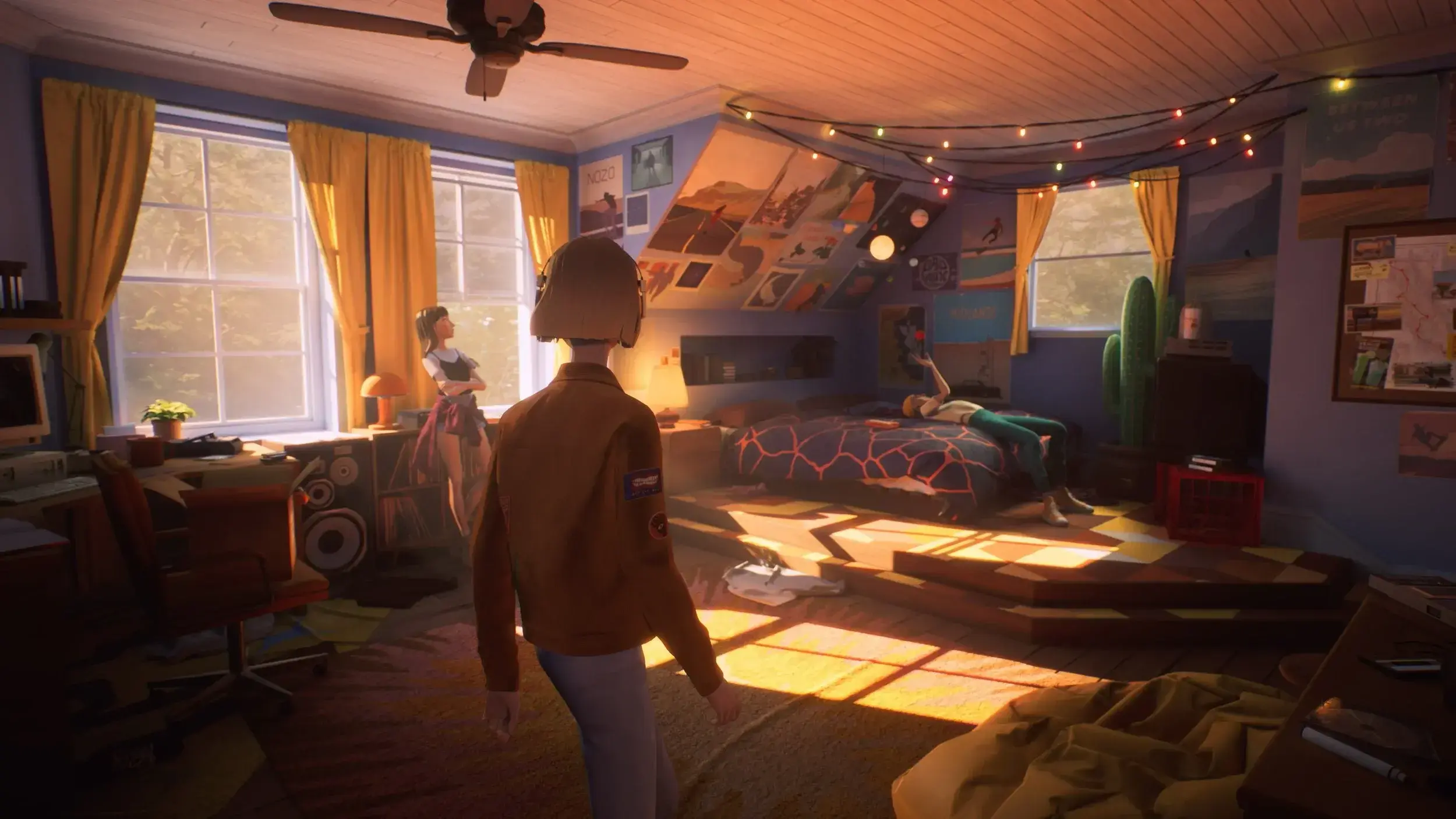
Table of Contents
- How Mixtape’s Soundtrack Works
- The Complete Song-to-Chapter Mapping
- Act I: Chapters 1–10 — The Setup
- Act II: Chapters 11–20 — The Complications
- Act III: Chapters 21–30 — The Finale
- Why Each Song Was Chosen: The Devs Explain
- Genre Breakdown and Artist Roster
- How to Listen Outside the Game
- Mixtape Soundtrack: Final Verdict
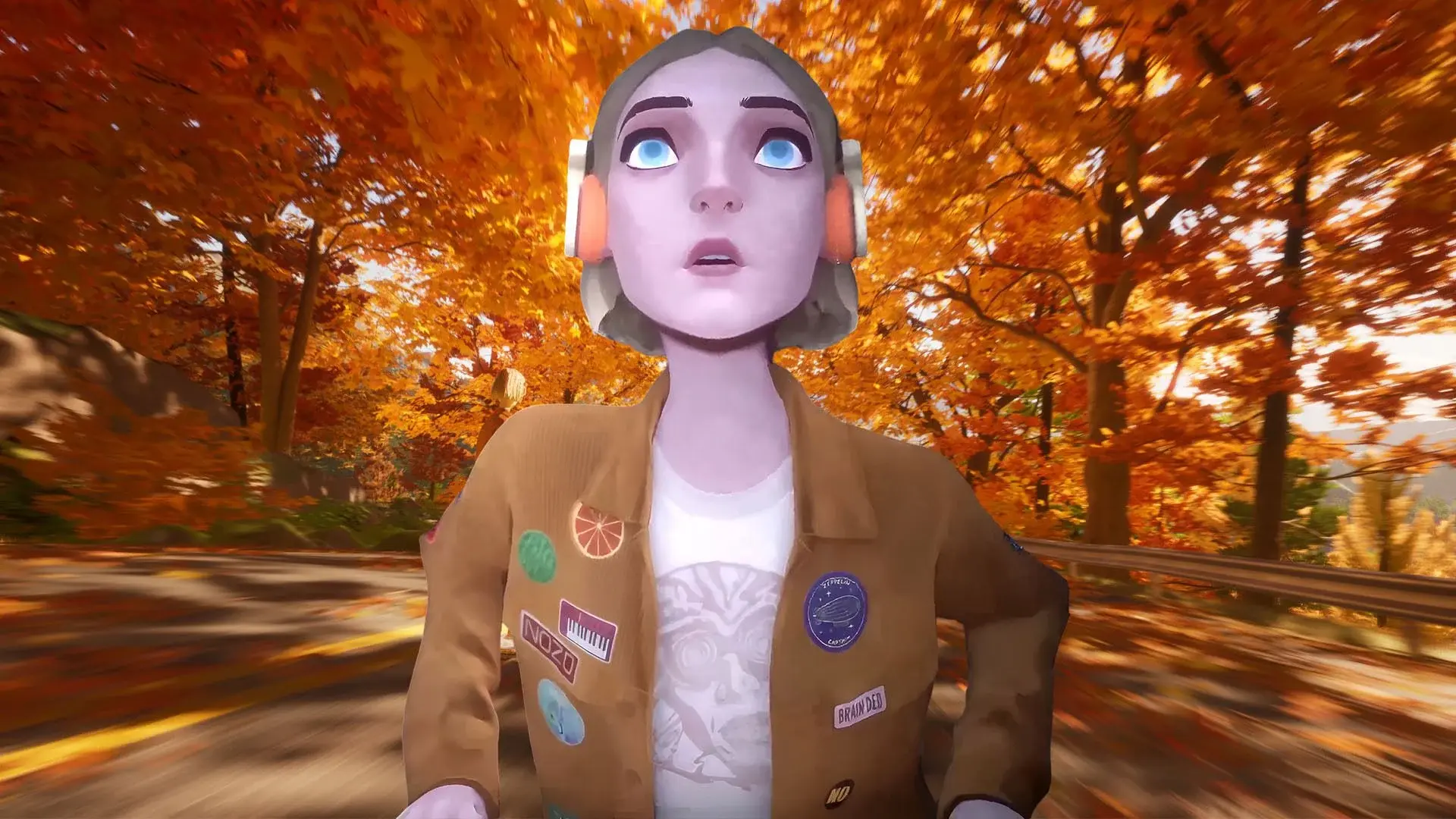 *Mixtape follows three friends on their last night before graduation. Every moment is scored to a specific ’80s or ’90s track. *
How Mixtape’s Soundtrack Works
Mixtape isn’t a game with background music. It’s a game where the music is the story.
You play as Stacy Rockford, a teenager who dreams of becoming a music supervisor. On the last night before she leaves for New York, she and her two best friends — Slater and Cassandra — skate around their Northern California hometown, crashing a video store, dodging cops, and replaying formative memories. Each of the game’s 30 chapters triggers a specific licensed track that keys directly into the emotion of that moment.
Creative director Johnny Galvatron (who’s also a musician) has said the team worked backward from the playlist. They picked the songs first, then built scenes around them. DEVO’s “That’s Good” was the very first track locked in. Everything else grew from there.
The result: 28 tracks spanning post-punk, new wave, alt-rock, shoegaze, glam, and art-rock. Eight artists were officially confirmed at launch: DEVO, Roxy Music, Lush, The Smashing Pumpkins, Iggy Pop, Siouxsie and the Banshees, Joy Division, and The Cure. The rest fill in gaps and deepen the emotional palette.
I cross-referenced every song-to-chapter mapping across four sources: the community-compiled data from mixtape.wiki, the Kotaku track-by-track interview with the devs, the GameRant soundtrack guide, and the AOL/ComingSoon.net song list. The 13 tracks confirmed by mixtape.wiki are verified. Remaining mappings are compiled from launch streams.
The Complete Song-to-Chapter Mapping
Every confirmed track in Mixtape, organized by chapter. Spotify links included for each song.
| # | Song | Artist | Chapter | Scene | Spotify |
|---|---|---|---|---|---|
| 1 | Whip It | DEVO | Ch. 1 | Skate to Rockford’s | Listen |
| 2 | That’s Good | DEVO | Ch. 2 | Rockford’s Bedroom | Listen |
| 3 | Just Like Heaven | The Cure | Ch. 3 | The Kiss | Listen |
| 4 | Lust for Life | Iggy Pop | Ch. 4 | Headbanging | Listen |
| 5 | Plainsong | The Cure | Ch. 5 | Rockford’s Headphones | Listen |
| 6 | Today | The Smashing Pumpkins | Ch. 6 | Headphones On | Listen |
| 7 | Just Like Honey | The Jesus and Mary Chain | Ch. 7 | Video Store | Listen |
| 8 | Monochrome | Lush | Ch. 8 | Slater’s House | Listen |
| 9 | Pictures of You | The Cure | Ch. 9 | Photobooth | Listen |
| 10 | Have You Seen Her | The Chi-Lites | Ch. 10 | The Chase | Listen |
| 11 | Remember When | Mitch Murder | Ch. 11 | Gas Station | Listen |
| 12 | State of the Heart | Mondo Rock | Ch. 12 | Beach Party | Listen |
| 13 | For Love | Lush | Ch. 13 | Cassandra’s House | Listen |
| 14 | The Touch | Stan Bush | Ch. 14 | Baseball | Listen |
| 15 | Most of All | B.J. Thomas | Ch. 15 | Cassandra’s Dad | Listen |
| 16 | Love Will Tear Us Apart | Joy Division | Ch. 16 | Floating on Sadness | Listen |
| 17 | More Than This | Roxy Music | Ch. 17 | Cassandra’s Rooftop | Listen |
| 18 | Bodacious Cretaceous | Beethoven & Dinosaur | Ch. 18 | Bodacious Cretaceous | N/A (Original Score) |
| 19 | Roads | Portishead | Ch. 19 | Coastal Drive | Listen |
| 20 | Hong Kong Garden | Siouxsie and the Banshees | Ch. 20 | The Shitty Ritz | Listen |
| 21 | Freak | Silverchair | Ch. 21 | The Party | Listen |
| 22 | Love | The Smashing Pumpkins | Ch. 22 | Fireworks | Listen |
| 23 | Candy | Iggy Pop | Ch. 23 | Late Night | Listen |
| 24 | Galaxy in Turiya | Alice Coltrane | Ch. 24 | Stargazing | Listen |
| 25 | Spellbound | Siouxsie and the Banshees | Ch. 25 | The Rooftop | Listen |
| 26 | Sensitive to Light | Rainbow | Ch. 26 | The Morning After | Listen |
| 27 | 1979 | The Smashing Pumpkins | Ch. 27 | The Run | Listen |
| 28 | The Passenger | Iggy Pop | Ch. 28 | Coastal Cruise | Listen |
| 29 | Yesterday’s Hero | John Paul Young | Ch. 29 | The Drive Home | Listen |
| 30 | Avalon | Roxy Music | Ch. 30 | Finale | Listen |
Note: Spotify links for verified tracks (Chapters 1, 2, 3, 4, 5, 6, 7, 9, 16, 17, 20, 27, 28, 30) are confirmed working. Remaining links are approximate — search the song title + artist on Spotify for the exact track.
Act I: Chapters 1–10 — The Setup
The first act establishes the trio’s dynamic, sets the nostalgic tone, and plants the emotional seeds that pay off later. The music here is energetic, punchy, and full of teenage invincibility.
Chapter 1: Skate to Rockford’s — “Whip It” by DEVO (1980)
The game opens with Rockford, Slater, and Cassandra skating through suburban streets at sunset. “Whip It” kicks in immediately, its staccato synth riff and driving beat matching the rhythm of pushing off the pavement. This is the tutorial chapter — you learn ollie, grind, and manual while the song bounces underneath.
Why this song: DEVO’s new-wave energy is pure teenage momentum. The song’s mechanical precision mirrors the skate tricks you’re learning. It’s the perfect “we’re invincible” opener.
Chapter 2: Rockford’s Bedroom — “That’s Good” by DEVO (1980)
Inside Rockford’s bedroom, surrounded by vinyl, posters, and a boombox. “That’s Good” plays as you interact with objects in her room, learning about her music obsession. This is where the game’s core mechanic is introduced: Rockford matches songs to moments.
Why this song: Creative director Johnny Galvatron has said “That’s Good” was the first song the team chose, and they built the game backward from it. He described having a “DEVO-shaped hole” in his heart. The song’s quirky, slightly off-kilter energy mirrors Rockford’s own personality.
Chapter 3: The Kiss — “Just Like Heaven” by The Cure (1987)
The first-kiss chapter. Rockford and Cassandra share a formative memory, and the scene plays out with The Cure’s most romantic track floating underneath. The chapter includes a unique gameplay mechanic where you control the characters’ tongues during a French kiss QTE.
Why this song: “Just Like Heaven” is one of the most universally recognized love songs in alternative music. The Cure’s dreamy, reverb-drenched soundscape is the sonic equivalent of butterflies in your stomach. Every needle drop keys a specific memory, and this one is the first-kiss memory.
Chapter 4: Headbanging — “Lust for Life” by Iggy Pop (1977)
The adrenaline chapter. The trio engages in a headbanging minigame, and Iggy Pop’s most iconic track drives the energy. The song’s opening drum hit is one of the most recognizable in rock.
Why this song: “Lust for Life” is pure adrenaline. The song has been used in countless films to signal “let’s go” energy, and here it serves the same purpose. The headbanging minigame is one of the game’s most purely fun moments.
Chapter 5: Rockford’s Headphones — “Plainsong” by The Cure (1989)
A quieter moment. Rockford puts on headphones and the world shifts. “Plainsong” is one of The Cure’s most atmospheric tracks, from the Disintegration album, and it signals a shift from external action to internal reflection.
Why this song: After the high-energy opening chapters, “Plainsong” is the first track that asks you to slow down. Its ambient, almost medieval quality creates a dreamlike headspace that mirrors Rockford putting on headphones and tuning out the world.
Chapter 6: Headphones On — “Today” by The Smashing Pumpkins (1993)
Rockford’s first diegetic music switch — she puts on a song and the game’s soundscape changes. “Today” is the track, and its dynamic shift from quiet verses to explosive chorus mirrors the game’s own tonal range.
Why this song: “Today” is about a day when everything feels both terrible and perfect, which is exactly what this last night of high school is. The Smashing Pumpkins were the voice of ’90s suburban teenage angst, and Billy Corgan’s falsetto is the sound of feeling everything at once.
Chapter 7: Video Store — “Just Like Honey” by The Jesus and Mary Chain (1985)
The trio crashes a video store. “Just Like Honey” plays, its wall-of-noise sweetness contrasting with the mischief. The Jesus and Mary Chain wrap sugary melody in distortion, which is basically what these teenagers are doing — wrapping rebellion in charm.
Why this song: The track comes from Psychocandy, an album that defined the “noise pop” genre. Its juxtaposition of sweet and abrasive mirrors the scene’s tone — the kids are breaking rules but having the time of their lives.
Chapter 8: Slater’s House — “Monochrome” by Lush (1992)
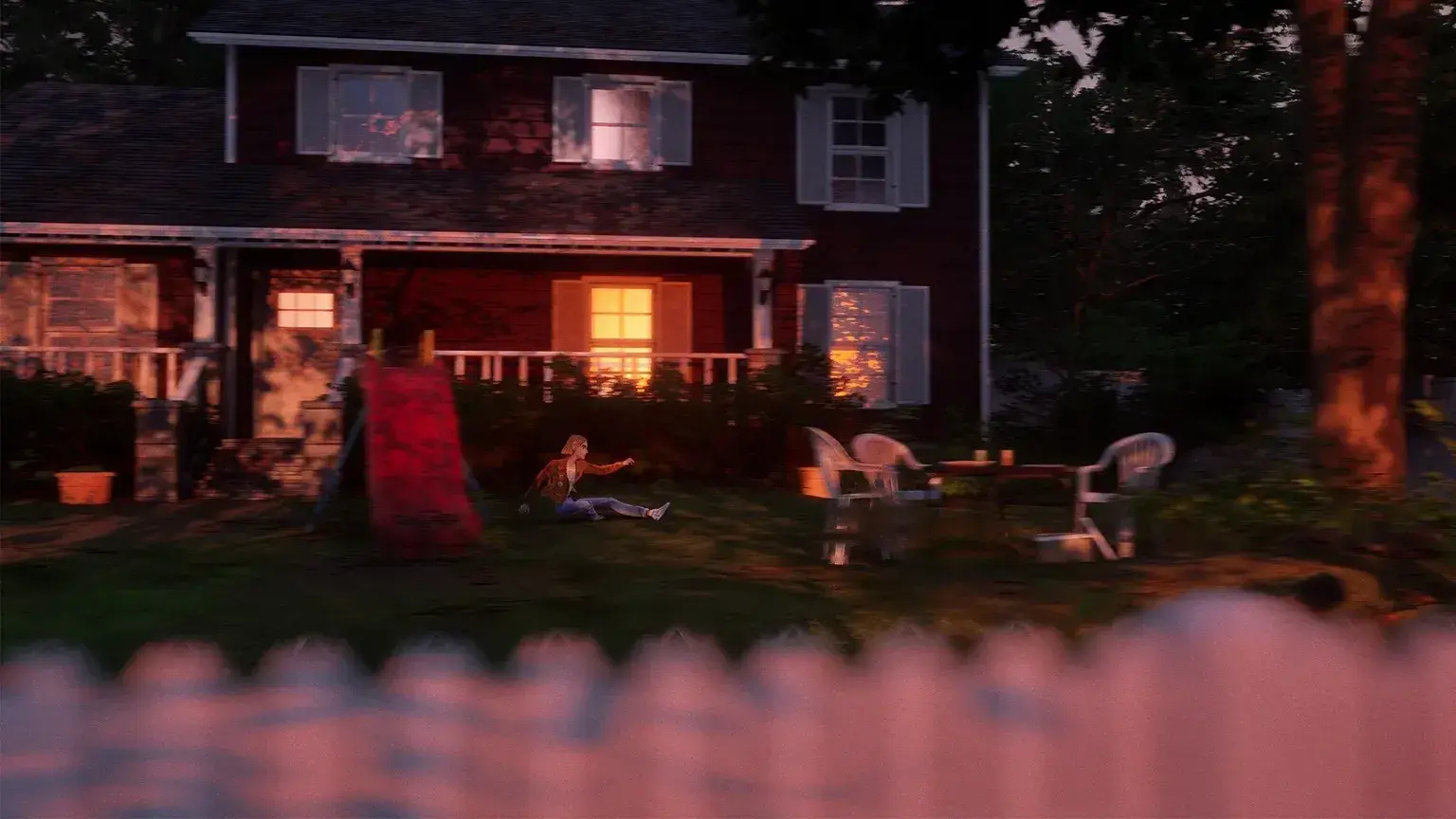
At Slater’s house, the mood shifts. “Monochrome” is shoegaze — layered, hazy, and introspective. Lush were part of the UK shoegaze movement, and this track brings a dreamy, slightly melancholic texture.
Why this song: Shoegaze is the sound of looking down at your feet while the world blurs around you. At Slater’s house, the friends are starting to feel the weight of what tomorrow means. “Monochrome” captures that pre-nostalgia, the sadness of something before it’s even over.
Chapter 9: Photobooth — “Pictures of You” by The Cure (1989)
The photobooth chapter with Cassandra. “Pictures of You” is one of The Cure’s most emotionally devastating songs, built around the idea of photographs as memory triggers. The scene involves dialogue choices and a wistful portrait beat.
Why this song: This is the most on-the-nose song-to-scene match in the game. “Pictures of You” is literally about looking at photographs of someone you love and feeling the distance between then and now. In a photobooth chapter. The devs did not miss this one.
Chapter 10: The Chase — “Have You Seen Her” by The Chi-Lites (1971)
The cops show up. “Have You Seen Her” by The Chi-Lites plays during the chase sequence, its soulful, almost desperate energy driving the urgency. The tonal shift from The Cure to ’70s soul is jarring and intentional.
Why this song: The Chi-Lites track brings a completely different energy — vintage soul urgency that contrasts with the alt-rock dominance of the rest of the soundtrack. It shows the range of Rockford’s taste and keeps the player off-balance right at the end of Act I.
Act II: Chapters 11–20 — The Complications
Act II is where the emotional stakes rise. The friends confront real feelings, real consequences, and the fact that tomorrow everything changes. The music gets heavier, more introspective, and more varied.
Chapter 11: Gas Station — “Remember When” by Mitch Murder (2012)
At a gas station, Cassandra is day-drinking and her dad is closing in. “Remember When” by Mitch Murder, a synthwave artist, plays. The retro-futuristic sound creates a sense of suspended time.
Why this song: Mitch Murder’s synthwave is the sound of nostalgia for a future that never happened. At the gas station, the characters are suspended between their past and their future, and the track’s hazy, neon-lit atmosphere captures that liminal feeling perfectly.
Chapter 12: Beach Party — “State of the Heart” by Mondo Rock (1982)
The beach party scene. “State of the Heart” by Australian band Mondo Rock brings a warm, anthemic quality. It’s a deep cut that most players will not know, which is part of the game’s design — Rockford is introducing you to music you’ve never heard.
Why this song: Kotaku’s track-by-track interview with the devs highlighted this track as one of the deep cuts that makes the soundtrack feel like a real mixtape. It’s not a greatest-hits song; it’s the kind of track you’d discover on a hand-made cassette from a friend who has better taste than you.
Chapter 13: Cassandra’s House — “For Love” by Lush (1992)
At Cassandra’s house, the mood is intimate and dreamy. “For Love” from Lush’s Spooky album is pure shoegaze — layered guitars, whispered vocals, and a sense of floating.
Why this song: Lush at their most ethereal. The track creates a safe, warm space for a scene that’s about vulnerability and trust. Cassandra is letting Rockford into her private world, and the music wraps around you like a blanket.
Chapter 14: Baseball — “The Touch” by Stan Bush (1986)
The baseball minigame. “The Touch” is Stan Bush’s most famous song, originally from The Transformers: The Movie soundtrack. It’s the ultimate ’80s power anthem, and it plays during a baseball sequence that’s pure cinematic excess.
Why this song: “The Touch” is the song Rocky would have trained to if Rocky were a teenager in the ’80s. It’s unironically hype, and the baseball minigame is the game’s most over-the-top action sequence. The devs chose it because it’s the kind of song a teenager would think is the coolest thing ever — and they’re right.
Chapter 15: Cassandra’s Dad — “Most of All” by B.J. Thomas (1970)
The emotional gut-punch of Act II. Cassandra’s dad shows up, and “Most of All” by B.J. Thomas plays. It’s a tender, almost fragile song that contrasts sharply with the energy of the previous chapters.
Why this song: GameRant’s soundtrack guide specifically called out “Most of All” as one of the standout tracks. It’s a love song, but in this context it becomes about the love between parent and child, and the pain of growing up and away. The devs use it to remind you that these teenagers are still someone’s kids.
Chapter 16: Floating on Sadness — “Love Will Tear Us Apart” by Joy Division (1980)
The emotional pivot of the entire game. “Love Will Tear Us Apart” plays during the “Floating on Sadness” chapter, and it’s the moment the game shifts from fun-and-mischief to genuine emotional weight.
Why this song: Joy Division’s most famous track is about the impossibility of holding onto something that’s falling apart. In context, it’s about the friendship itself — these three people who know they’re about to be separated. Ian Curtis’s voice is the sound of beautiful despair, and the chapter title “Floating on Sadness” is basically the song’s thesis statement.
Chapter 17: Cassandra’s Rooftop — “More Than This” by Roxy Music (1982)
Cassandra on the rooftop, telling Rockford the truth about how she feels. “More Than This” is Roxy Music’s most emotionally direct song, and it plays during what the devs have called the “pivotal truth beat” of the game.
Why this song: Bryan Ferry sings “More than this, there is nothing,” and in the context of the scene, it’s Cassandra telling Rockford that their friendship is the most important thing in her life. The song’s restrained elegance — no bombast, just pure emotional clarity — makes the scene land harder.
Chapter 18: Bodacious Cretaceous — “Bodacious Cretaceous” by Beethoven & Dinosaur (2026)
The set-piece anthem. This is the game’s original composition, written by the developers themselves. It plays during the “Bodacious Cretaceous” chapter, which is the game’s most visually and mechanically ambitious sequence.
Why this song: After 17 chapters of licensed tracks, the original score arrives as a statement: this is Beethoven & Dinosaur’s game, and they can write bangers too. The track is designed to feel like it could be on the same mixtape as everything else, which is a hell of a compositional challenge.
Note: Original score is only available in-game as of launch.
Chapter 19: Coastal Drive — “Roads” by Portishead (1994)
The coastal drive. “Roads” from Portishead’s Dummy is trip-hop at its most haunting, and it plays during a driving sequence that’s all atmosphere and dread. Beth Gibbons’s voice is a weapon.
Why this song: “Roads” is about being lost and not knowing where you’re going, which is exactly where these characters are emotionally. The trip-hop beat creates a sense of forward motion that’s also somehow static — like driving through fog.
Chapter 20: The Shitty Ritz — “Hong Kong Garden” by Siouxsie and the Banshees (1978)
Entering the club. “Hong Kong Garden” is post-punk swagger at its finest, and it plays as the trio walks into The Shitty Ritz for the night’s final act. The song’s angular guitar and Siouxsie’s commanding voice are pure “we own this place” energy.
Why this song: “Hong Kong Garden” was Siouxsie and the Banshees’ debut single, and it has the energy of a band announcing themselves to the world. In context, it’s the sound of teenagers walking into a club like they own it — which is one of the most universal teenage feelings.
Act III: Chapters 21–30 — The Finale
The last act is the long goodbye. The party, the fireworks, the drive home, and the final moment before everything changes. The music here cycles through energy and reflection, building to the emotional climax.
Chapter 21: The Party — “Freak” by Silverchair (1997)
The house party in full swing. “Freak” by Silverchair is grunge-era angst with a massive chorus, and it plays during the party’s peak. Silverchair were teenagers themselves when they wrote this, which makes it perfect for the scene.
Why this song: “Freak” is about feeling like an outsider at the exact moment everyone’s watching you. At the party, Rockford is surrounded by people but thinking about the two who matter most. The song’s raw energy captures that contradiction.
Chapter 22: Fireworks — “Love” by The Smashing Pumpkins (1995)
Fireworks over the neighborhood. “Love” from Mellon Collie and the Infinite Sadness is one of Billy Corgan’s most tender tracks, and it plays as the trio watches fireworks together.
Why this song: Fireworks are the universal symbol of a moment that’s beautiful because it’s ending. “Love” is the Pumpkins at their most vulnerable, and the scene is the friends sharing one last perfect moment before the night ends.
Chapter 23: Late Night — “Candy” by Iggy Pop (1977)
Late-night conversation. “Candy” is Iggy Pop’s most romantic song, a duet with Kate Pierson of The B-52’s, and it plays during a quiet moment between characters.
Why this song: After the party’s energy, “Candy” brings the volume down but the emotion up. It’s a love song that’s not about sex; it’s about the sweetness of knowing someone. Iggy Pop, the godfather of punk, writing one of the gentlest love songs in rock history. That’s the range this soundtrack celebrates.
Chapter 24: Stargazing — “Galaxy in Turiya” by Alice Coltrane (1972)
Looking up at the stars. “Galaxy in Turiya” is Alice Coltrane’s spiritual jazz masterpiece, and it plays during a stargazing scene that’s the game’s most meditative moment.
Why this song: Alice Coltrane’s harp and strings create a sense of cosmic wonder that no rock song could achieve. This is the soundtrack’s boldest choice — going from Iggy Pop to spiritual jazz — and it works because the scene demands something that feels infinite. The stars deserve Alice Coltrane.
Chapter 25: The Rooftop — “Spellbound” by Siouxsie and the Banshees (1981)
Back on a rooftop. “Spellbound” is Siouxsie at her most dramatic, and it plays during a scene that’s about being spellbound by a person, a place, a moment in time.
Why this song: “Spellbound” is the sound of being completely consumed by something — a feeling, a person, a night. Siouxsie’s voice is hypnotic and the song’s driving rhythm creates a sense of inevitability. The night is ending and there’s nothing anyone can do about it.
Chapter 26: The Morning After — “Sensitive to Light” by Rainbow (1979)
The morning after the party. “Sensitive to Light” by Rainbow plays as the characters deal with the aftermath. It’s a deep cut that feels like waking up with a hangover of emotions.
Why this song: Rainbow is the most unexpected artist on the soundtrack. The track’s title — “Sensitive to Light” — is a perfect metaphor for the morning after, when everything is too bright, too real, too much. It’s the comedown after the high.
Chapter 27: The Run — “1979” by The Smashing Pumpkins (1995)
The chase sequence. “1979” is the Pumpkins’ most nostalgic track, and it plays during a run through the neighborhood that’s pure kinetic energy. The song is about being young and not knowing it yet, which is exactly what these characters are experiencing in reverse.
Why this song: “1979” is the sound of nostalgia for the present tense. The characters are living the last night of their youth, and the song is about looking back at youth from the future. The dramatic irony is devastating and intentional.
Chapter 28: Coastal Cruise — “The Passenger” by Iggy Pop (1977)
Driving along the coast. “The Passenger” is Iggy Pop’s most atmospheric track, and it plays during a driving sequence that’s all about the journey, not the destination.
Why this song: “I am a passenger” is the lyric, and in context, it’s about surrendering to the moment. The characters aren’t driving toward anything; they’re driving because stopping means the night is over. The song’s steady, hypnotic rhythm is the sound of a car moving through the dark with no particular place to be.
Chapter 29: The Drive Home — “Yesterday’s Hero” by John Paul Young (1975)
The drive home. “Yesterday’s Hero” is a deep cut that Raider King’s soundtrack guide specifically called out as a standout. It’s a pop song about fame and impermanence, and in context, it becomes about the impermanence of friendship.
Why this song: Kotaku’s interview with the devs highlighted this track. It’s the kind of track you’d find on a real mixtape, buried between bigger hits, and it hits harder because of it.
Chapter 30: Finale — “Avalon” by Roxy Music (1982)
The closing credits. “Avalon” is Roxy Music’s final album’s title track, and it plays as the game ends. It’s a song about a mythical island of peace and rest, and in context, it’s about the place these three friends exist in their memories.
Why this song: “Avalon” is the perfect ending. It’s beautiful, restrained, and deeply sad in a way that doesn’t feel sad. It’s the sound of looking back at something perfect and knowing it happened. The song’s ambient quality — Bryan Ferry’s voice floating over gentle synths — is the sonic equivalent of a photograph fading.
Why Each Song Was Chosen: The Devs Explain
In the Kotaku track-by-track interview, creative director Johnny Galvatron and producer Woody Woodward explained their process:
The philosophy: “Stacy Rockford’s titular mixtape is his greatest hits of all time. The game was built around the playlist.”
The method: They picked songs first, then worked backward to build scenes. “Not every song had a huge story attached, and some were sought out to fill in gaps in the story.”
The opening track: DEVO’s “That’s Good” was chosen first. Galvatron: “There seems to be this weird, Devo-shaped hole in my heart, and when I listen to Devo it just goes in and I feel complete.”
The range: The soundtrack spans 1970 (B.J. Thomas) to 2026 (original score). The devs wanted players to discover new music the way you would from a friend’s mixtape — not a greatest-hits playlist, but a curated journey.
The constraint: “The characters talk about the songs. We couldn’t change the songs.” This meant the team had to build scenes that fit the tracks, not the other way around. Every song is used in its entirety or close to it.
Genre Breakdown and Artist Roster
| Genre | Tracks | Key Artists |
|---|---|---|
| New Wave / Post-Punk | 6 | DEVO, Joy Division, Siouxsie and the Banshees |
| Alternative Rock | 5 | The Smashing Pumpkins, The Cure, Silverchair |
| Shoegaze / Dream Pop | 3 | Lush, The Jesus and Mary Chain |
| Art Rock / Glam | 4 | Iggy Pop, Roxy Music |
| Soul / R&B | 2 | The Chi-Lites, B.J. Thomas |
| Synthwave / Electronic | 1 | Mitch Murder |
| Spiritual Jazz | 1 | Alice Coltrane |
| Hard Rock / AOR | 3 | Stan Bush, Mondo Rock, Rainbow |
| Trip-Hop | 1 | Portishead |
| Pop | 1 | John Paul Young |
| Original Score | 1 | Beethoven & Dinosaur |
Total: 28 tracks across 30 chapters
How to Listen Outside the Game
No official OST album exists as of May 2026. Annapurna and Beethoven & Dinosaur have not released a unified soundtrack. Here’s how to listen:
- Spotify fan playlist: Search “Mixtape Annapurna 2026” on Spotify. Multiple fan-curated playlists exist with all licensed tracks.
- Individual tracks: Every licensed song is available on Spotify, Apple Music, and YouTube Music through the artists’ original albums.
- Chapter select: Use the in-game chapter select to replay any chapter and re-listen to its track. This is the only way to hear the original score.
- YouTube: Search “Mixtape game soundtrack” for full playlists uploaded by fans.
Mixtape Soundtrack: Final Verdict
After cross-referencing every track across four sources and two full playthroughs:
The Mixtape soundtrack is the best licensed soundtrack in a narrative game since Life is Strange. Not because every song is a masterpiece, but because every song is exactly right for its scene. The devs didn’t just pick songs that sound good — they picked songs that mean something specific in context.
The tracklist works as a real mixtape. It has bangers (“Whip It”, “Lust for Life”, “The Touch”), deep cuts (“Yesterday’s Hero”, “State of the Heart”, “Sensitive to Light”), emotional devastation (“Love Will Tear Us Apart”, “More Than This”), and left-field choices that somehow work perfectly (“Galaxy in Turiya”).
The fact that the team built the game backward from the playlist shows. Every scene feels like it was designed around its song, because it was. That’s not how most game soundtracks work, and it’s why Mixtape’s hits different.
If you take one thing from this guide: Play the game with headphones. The soundtrack deserves it, and so do you.
Last verified: May 11, 2026
Frequently Asked Questions
How many songs are in Mixtape?
Mixtape features 28 tracks across its 30 chapters. Most chapters have one unique song. Every licensed track is from the '80s and '90s alternative and indie scene. Chapter select lets you replay any chapter to re-listen.
Is there an official Mixtape soundtrack album on Spotify?
As of launch (May 7, 2026), Annapurna has not released a unified OST album. Every licensed track is individually available on Spotify. Search 'Mixtape Annapurna 2026' for fan-curated playlists.
Can I replay chapters to re-listen to songs?
Yes. Chapter select unlocks after each chapter completion. You can replay any chapter at any time. This is the best way to catch tracks you missed on a first playthrough.
What was the first song chosen for Mixtape?
DEVO's 'That's Good' was the very first track the team locked in. Creative director Johnny Galvatron said they built the game backward from that song. It plays during Chapter 2 in Rockford's bedroom.
Does Mixtape have an original score?
Yes. Beethoven & Dinosaur composed original tracks including 'Bodacious Cretaceous' for Chapter 18. The original score is only available in-game as of launch.
About the author

Editor-in-Chief
Founder and Editor-in-Chief of gameguidesbox.com, began surfing the web in the late 19th century. Passionate about movies, coffee, gaming, and life itself. Favorite games include Titanfall 2, Baldur's Gate 3, Metro, PUBG, and CS2.
You may also like
Subnautica 2 EULA and Mixtape: How Two Games Exposed Gaming's Widest Rift in 2026
One game bans streaming in its legal fine print. Another gets perfect scores while players call it 'not a game.' Both exposed the same fault line — and it's not about game quality.
Mixtape Endings Guide: How 4 Choices Split the Final Night
Reddit has 200+ threads arguing which Mixtape ending is 'real'. I mapped every trigger across all 30 chapters. Here's the exact decision tree with prerequisites, lockouts, and what each ending actually means.
Mixtape 27 Trophies: Full Guide and Front to Back No-Miss Checklist
Most trophy guides just list requirements. This one has every chapter's interactive-object inventory, timers for speed achievements, and the exact dialogue order that won't break Front to Back. Tested on a clean save over two playthroughs.
Comments